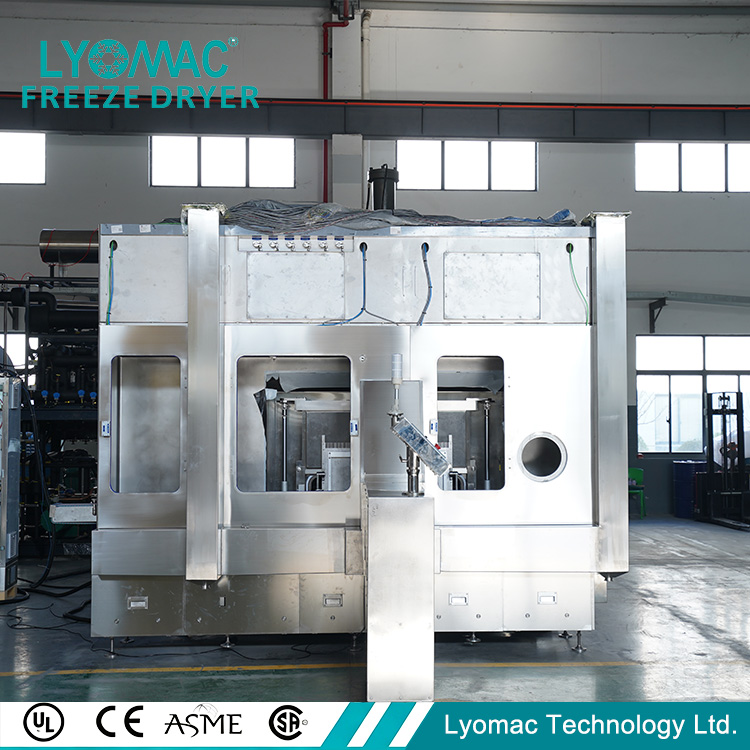
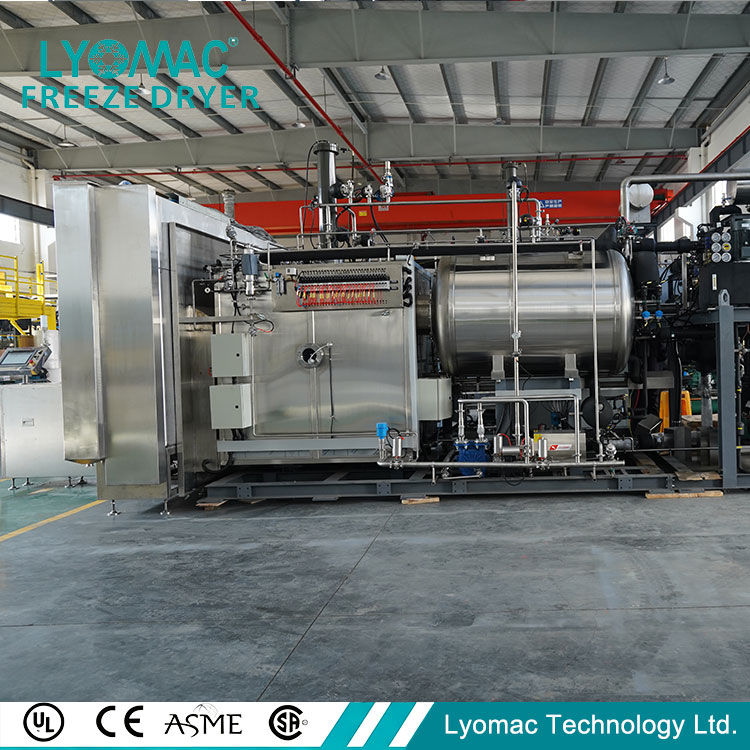
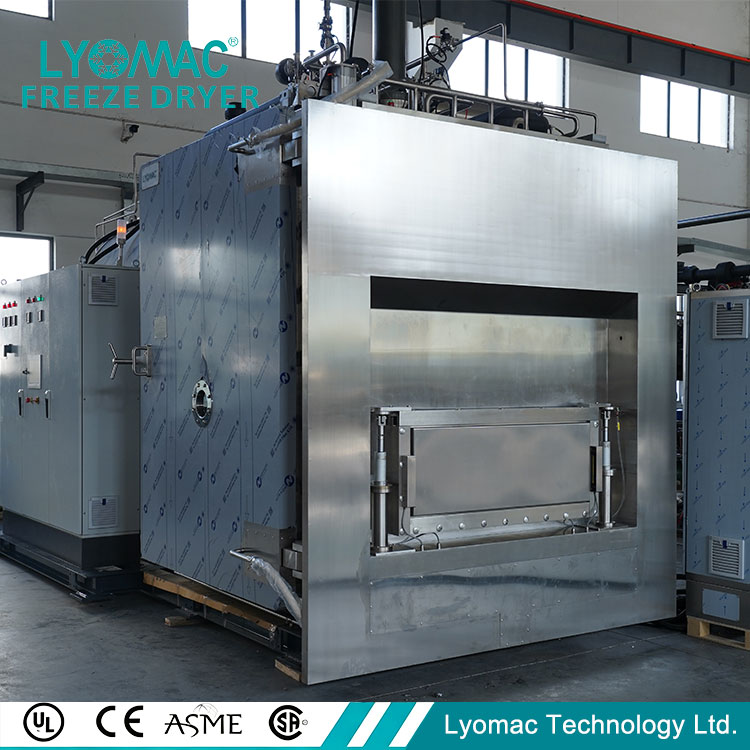
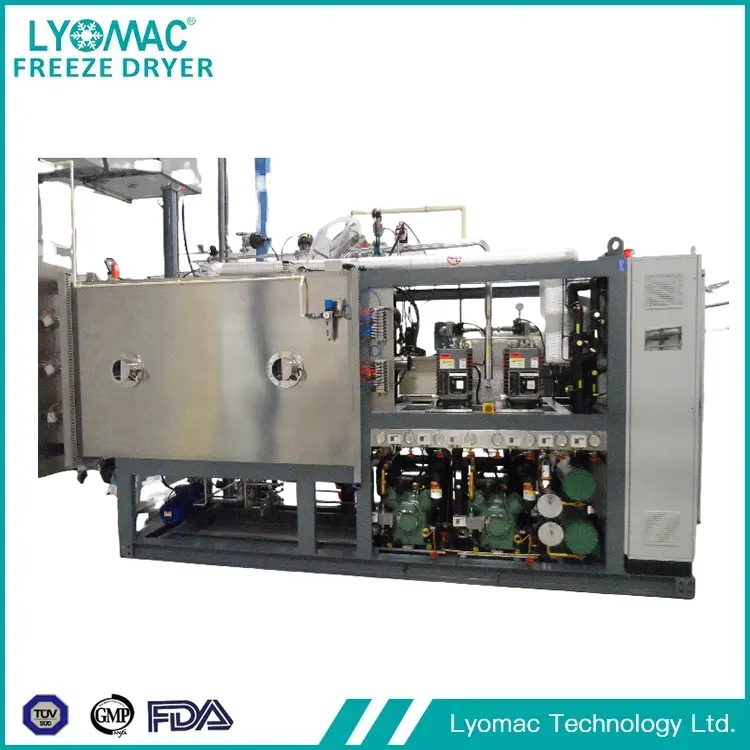
In the food industry's pursuit of "high quality, long shelf life, and low loss," food freeze-drying equipment, with its unique technological advantages, has become a key link connecting food production, processing, and distribution. Unlike the small-scale applications of household freeze dryers, industrial-grade food freeze-drying equipment, with its large-scale, intelligent, and customized characteristics, deeply empowers multiple fields such as snack foods, biopharmaceutical foods, and emergency reserve foods, driving the food industry towards a more efficient and healthier direction.
I. Core Technology: The Precision of Equipment Through the "Three Stages of Freeze-Drying"
The working principle of food freeze-drying equipment is based on three core stages: "freezing - sublimation - desorption." Its technological precision directly determines the final quality of the food. Firstly, in the pre-freezing stage, the equipment needs to rapidly cool the food to -40℃ to -60℃, causing the internal moisture to form tiny ice crystals—this step is crucial. The smaller the ice crystals, the less damage is done to the food's cell structure, and the closer the taste and freshness after rehydration are to the original state. To this end, high-end equipment is equipped with a multi-stage temperature control system, customizing freezing curves based on the moisture content and structural characteristics of different foods (such as fruits, vegetables, meats, and liquid foods).
After entering the sublimation drying stage, the equipment uses a vacuum system to reduce the pressure inside the drying chamber to 10-50 Pa (far below standard atmospheric pressure). At this point, the melting point of ice is below the freezing point, and water directly sublimates from solid ice into water vapor. To prevent the ice crystals from melting due to a rise in food temperature, the equipment also uses heating plates for "low-temperature heating," controlling the food surface temperature to remain below the eutectic point (the lowest temperature at which moisture completely freezes), ensuring a stable sublimation process. The precision of vacuum and heating temperature control in this stage is a core indicator distinguishing the quality of the equipment—ordinary equipment may experience uneven drying due to vacuum fluctuations, while high-end equipment can control the vacuum error within ±2 Pa.
Finally, in the desorption and drying stage, targeting the bound water within the food (water bound to proteins and carbohydrates), the equipment needs to appropriately increase the temperature (usually not exceeding 50℃) and extend the vacuum holding time to further reduce the moisture content to below 1%, fundamentally inhibiting microbial growth and extending the food's shelf life. Throughout the process, the equipment's PLC control system collects data such as temperature, vacuum level, and moisture content in real time, automatically adjusting parameters through algorithms to achieve intelligent control of the entire process.
II. Industry Applications: Covering Multiple Scenarios and Solving Pain Points in Food Processing
The application scenarios of freeze-drying equipment have expanded from the early high-end health product sector to multiple fields such as mass-market foods, emergency supplies, and special diets, precisely addressing the core pain points of traditional food processing.
In the snack food sector, freeze-drying technology makes "healthy snacks" possible. Traditional fried snacks (such as potato chips and fruit and vegetable crisps) suffer from nutrient loss due to high-temperature processing and have high oil content; while freeze-dried fruit and vegetable crisps and freeze-dried meat jerky, through low-temperature freeze-drying, can retain more than 90% of vitamin C, dietary fiber, and natural flavor, without the need for added oils and preservatives. For example, a snack food company uses continuous freeze-drying equipment to achieve a daily production capacity of 3 tons of freeze-dried strawberry crisps. Due to its "zero additives, high nutritional value" characteristics, the product boasts a repurchase rate of over 35% on e-commerce platforms, far exceeding that of traditional fried snacks.
In the biopharmaceutical and food sectors, freeze-drying equipment is an indispensable core component. For heat-sensitive foods such as probiotic powders, enzyme preparations, and oral nutritional solutions, high-temperature drying leads to the inactivation of active ingredients. Freeze-drying equipment, however, removes moisture in a low-temperature vacuum environment, resulting in a retention rate of over 95% of active ingredients and extending the shelf life to 2-3 years. A biotechnology company uses a vacuum freeze dryer to produce probiotic powder. By precisely controlling the pre-freezing temperature and sublimation rate, the survival rate of probiotics has increased from 60% with traditional drying to 92%, and the product is exported to overseas markets.
In the fields of emergency reserves and military rations, freeze-dried foods, due to their "lightweight, long-lasting, and portable" characteristics, have become the preferred choice for emergency supplies. For example, freeze-dried rice and freeze-dried soup mixes weigh only one-third of traditional canned goods, have a shelf life of over five years, and can be rehydrated in just five minutes by adding hot water. During the pandemic, freeze-dried foods accounted for over 40% of emergency supplies procured by governments in many regions. The large-scale freeze-drying production lines behind these supplies can operate continuously 24 hours a day, ensuring rapid supply of emergency materials.
Furthermore, freeze-drying equipment plays a crucial role in the field of special dietary foods, such as infant formula, elderly food, and sports nutrition products. For instance, freeze-dried infant fruit puree requires no added sucrose or thickeners, preserving the natural taste and nutrition of the fruit and solving the problem of nutrient loss caused by high-temperature sterilization in traditional complementary foods. Freeze-dried protein powder, through low-temperature freeze-drying, avoids protein denaturation and improves absorption and utilization rates.
III. Technological Trends: Intelligentization, Energy Saving, and Customization Become Mainstream
As the food industry's requirements for quality and efficiency continue to increase, the technological development of food freeze-drying equipment presents three major trends. First, intelligent upgrading: the new generation of equipment is generally equipped with industrial internet modules, enabling remote monitoring, fault warnings, and parameter optimization through cloud platforms. For example, a certain equipment manufacturer developed a "freeze-drying cloud system" that can collect real-time operating data from multiple devices, predict the lifespan of vulnerable parts (such as vacuum pump seals and heating plates) through big data analysis, and send maintenance reminders in advance, reducing equipment failure rates by more than 30%.
Secondly, energy-saving upgrades are being implemented. Addressing the high energy consumption of freeze-drying equipment (mainly from the vacuum and refrigeration systems), companies are reducing energy consumption through technological innovation. For example, variable frequency vacuum pumps are used, automatically adjusting their speed according to the vacuum requirements of the drying stage, saving 25% energy compared to traditional fixed frequency pumps. Some equipment also incorporates heat pump technology to recover the cold energy generated during sublimation and use it in the pre-freezing stage, reducing overall energy consumption by 15% to 20%—which can save large-scale production enterprises hundreds of thousands of yuan in electricity costs annually.
Thirdly, customized design is being implemented. The processing requirements of different foods vary significantly, and general-purpose equipment can no longer meet the needs of specific market segments. For example, for liquid foods (such as yogurt and juice), equipment needs to be equipped with special trays or spray freezing systems to prevent the liquid from flowing during the pre-freezing stage; for large pieces of meat (such as whole chickens and steaks), a layered heating structure needs to be designed to ensure uniform sublimation of internal moisture. Currently, leading equipment manufacturers can provide full-process customization services, from equipment size and heating methods to control systems, based on customers' product characteristics and production capacity requirements, helping companies achieve "tailor-made" production solutions.
IV. Market Outlook: Demand Growth and Technological Breakthroughs Drive Industry Expansion
With increasing consumer demand for healthy foods, improved emergency reserve systems, and the growth of food export trade, the global food freeze-drying equipment market is maintaining an average annual growth rate of 8% to 10%. According to industry data, the global food freeze-drying equipment market size exceeded US$5 billion in 2024, with the Chinese market, driven by the rapid development of the food industry, experiencing a growth rate of over 12%, becoming one of the fastest-growing markets globally.
In the future, as freeze-drying technology becomes more widespread, equipment costs will gradually decrease, and its applications will expand to more niche markets—for example, freeze-drying soups in the ready-to-cook food sector and freeze-drying fruit cubes in the baking sector. For food companies, choosing suitable freeze-drying equipment is not only crucial for improving product quality but also an important strategic move to seize a share of the healthy food market and enhance supply chain resilience. For equipment manufacturers, continuous breakthroughs in core technologies (such as lower-energy-consumption vacuum systems and more precise temperature control algorithms) and optimized customized service capabilities will become core competitive advantages.
In conclusion, food freeze-drying equipment is no longer simply a "processing tool" but a core force driving the food industry's transformation from "traditional manufacturing" to "high-end intelligent manufacturing." Its technological development and application expansion will continue to reshape the production model and consumption pattern of the food industry.