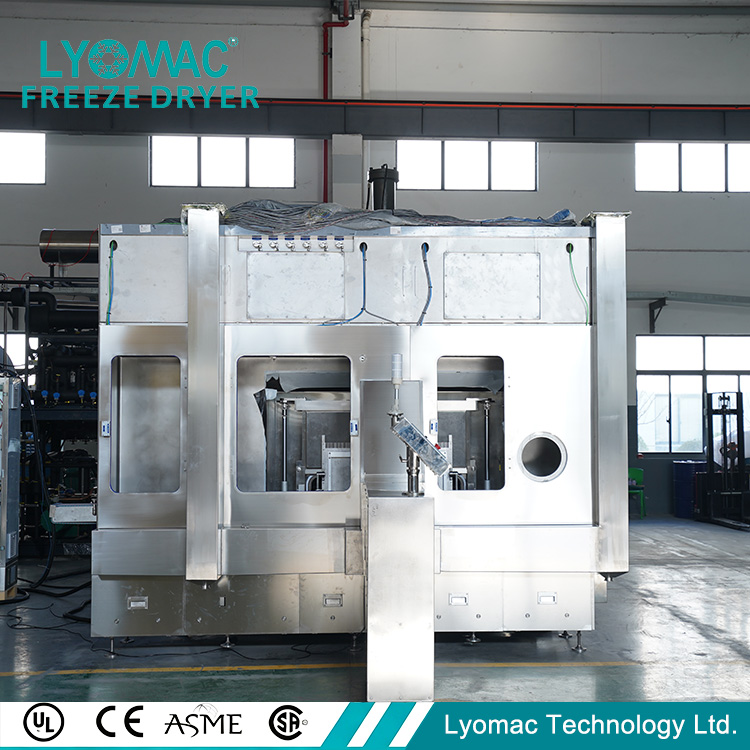
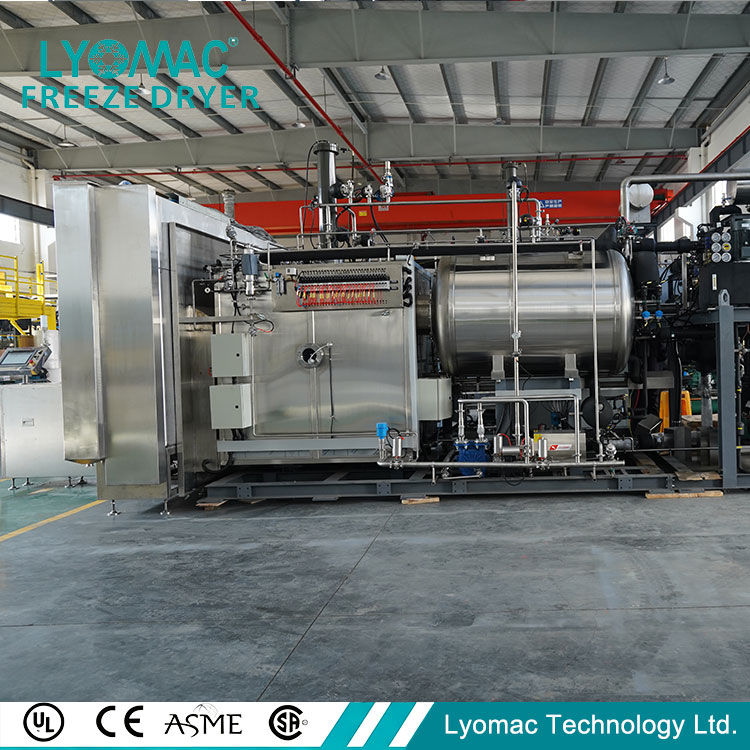
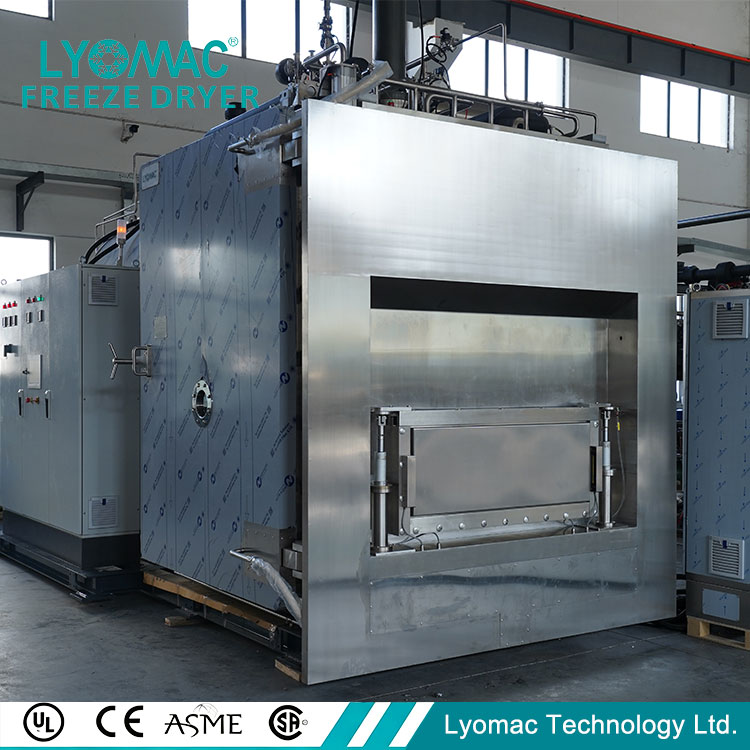
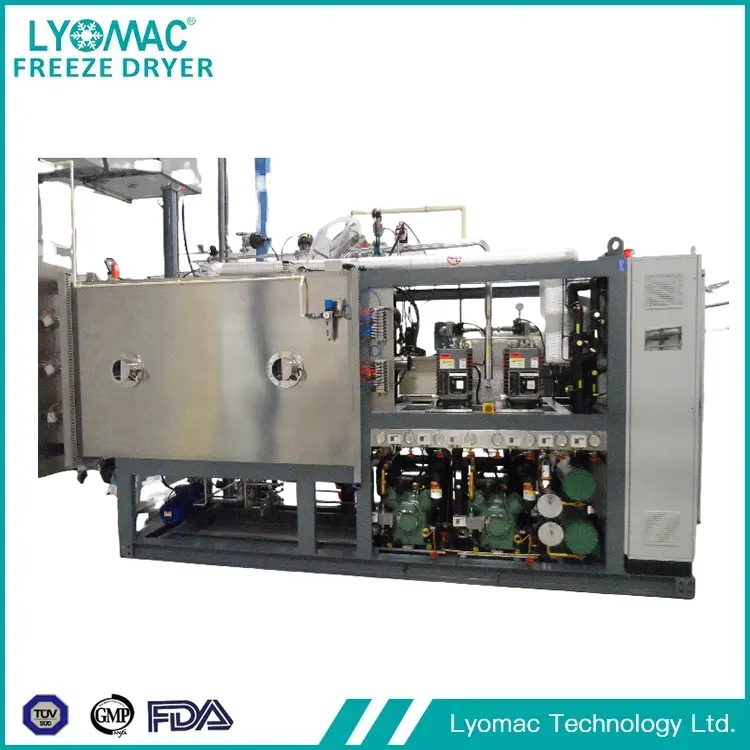
In the high-stakes world of nutraceutical manufacturing, preserving the potency, stability, and bioactivity of sensitive ingredients is paramount. This is where the Nutraceutical Lyophilizer becomes an indispensable piece of technology. Also known as freeze dryers, these sophisticated systems remove water from products through sublimation—the direct transition of ice to vapor under a vacuum.
| Parameter | Specification Range & Description |
|---|---|
| Chamber Size & Capacity | Available from pilot-scale (0.5 - 2 sq. meters of shelf area) to large industrial units (10+ sq. meters). Capacity is typically measured in liters of ice condenser capacity (e.g., 100L, 500L, 1000L) or kg of ice sublimation per batch. |
| Shelf Temperature Range | -55°C to +70°C. Precise control within this range is vital for optimizing freezing and primary/secondary drying phases for different material types. |
| Ultimate Vacuum Level | ≤ 5 Pa (0.05 mbar). A deep, stable vacuum is essential for efficient sublimation and achieving very low residual moisture content. |
| Condenser Temperature | -75°C to -85°C. A low condenser temperature ensures high vapor trapping efficiency, shortening cycle times. |
| Shelf Material & Design | 316L Stainless Steel, electropolished finish. Shelves can be stationary or movable (for stoppering under vacuum in pharmaceutical-grade models). Internal channels allow for uniform circulation of silicone oil for temperature control. |
| Control System | Fully automated PLC with color HMI touchscreen. Features recipe storage, remote monitoring, data logging (21 CFR Part 11 compliant optional), and full process visualization. |
Q: Which nutritional supplements are particularly suitable for freeze-drying?
A: Freeze-drying technology is tailor-made for valuable nutritional supplements that require high bioavailability. For example, probiotic powders and various live bacteria strains—the number of live bacteria is crucial for these products, and freeze-drying preserves them. Extracts from delicate ingredients like acai berries, elderberries, and green tea, whose antioxidants and plant nutrients are highly susceptible to damage, are also preserved through freeze-drying. Marine fish oil and lipid supplements, which are easily oxidized, are also protected by freeze-drying. Collagen peptides and protein powders need to maintain their absorption properties, enzyme preparations need to retain their catalytic activity, and customized vitamin and mineral premixes need to maintain ingredient stability—all are suitable for freeze-drying. Simply put, anything that would be destroyed by heating, exposure to oxygen, or conventional drying methods is best suited for freeze-drying.
Q: How long does it typically take to freeze-dry a nutritional supplement?
A: That varies depending on several key conditions. For example, consider the formula of the health supplement itself, the amount of dried ingredients, the quantity packed in trays or small bottles, the thickness of the layer, the chosen freeze-drying method, and the stringency of the required moisture content. For small batches of simple extracts, a thin layer is sufficient in 18 to 24 hours; however, for sugary probiotics, a thicker layer might take 3 days or even longer. Our automated system optimizes each step of the freeze-drying process—pre-freezing, first drying, and second drying—ensuring product quality while completing the process as quickly as possible.
To improve production efficiency and product quality, choosing the right equipment is fundamental, but the real key lies in process optimization. There are several core steps involved, which we'll explain one by one:
Pretreatment and Formulation: Laying a Solid Foundation is the First Step
The composition ratio of the solution or slurry is crucial. Take probiotic freeze-drying as an example: adding cryoprotectants like trehalose helps protect the cell walls of the probiotics, preventing damage during freezing. Furthermore, adjusting the pH value and the amount of solids is also very important—it not only makes the freezing process smoother but also results in a better structure in the final freeze-dried cake, making it less prone to breakage.
Freezing Process: Ice Crystal Size Holds Significant Importance
The freezing speed and the final freezing temperature directly affect the size of the ice crystals. Controlling the freezing process slowly will result in larger ice crystals, creating many small pores in the freeze-dried product, which naturally speeds up the subsequent drying and sublimation process. However, there's no universal formula for this step; a customized freezing plan must be developed based on the characteristics of each product.
Primary Drying (Sublimation): The Most Time-Consuming "Dehydration Battle"
This step is the most time-consuming in the entire process. The core principle is simple: provide the energy needed for sublimation to heat the shelves, but the temperature must never exceed the product's tolerance limit—if it exceeds the disintegration temperature, the product will be ruined. Simultaneously, the vacuum level must be closely monitored and consistently maintained below the vapor pressure of ice; otherwise, sublimation cannot proceed smoothly.
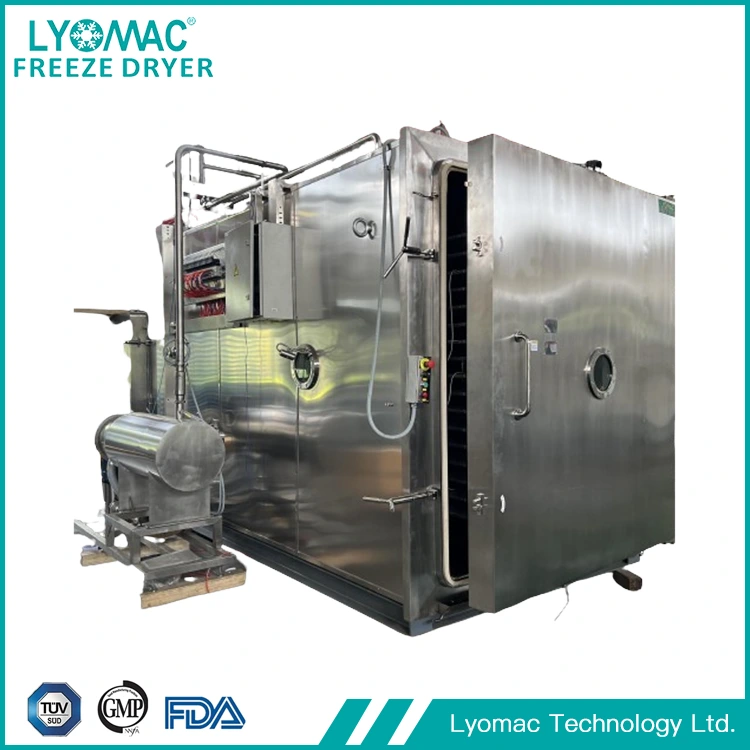
Health Food Lyophilization Machine is produced by Lyomac factory - the manufacturer and supplier in China. Our machine has a drying capacity of up to 1,000 liters, a regulatory compliant SCADA control system, and an energy efficient control system for the compressor and vacuum pump.